
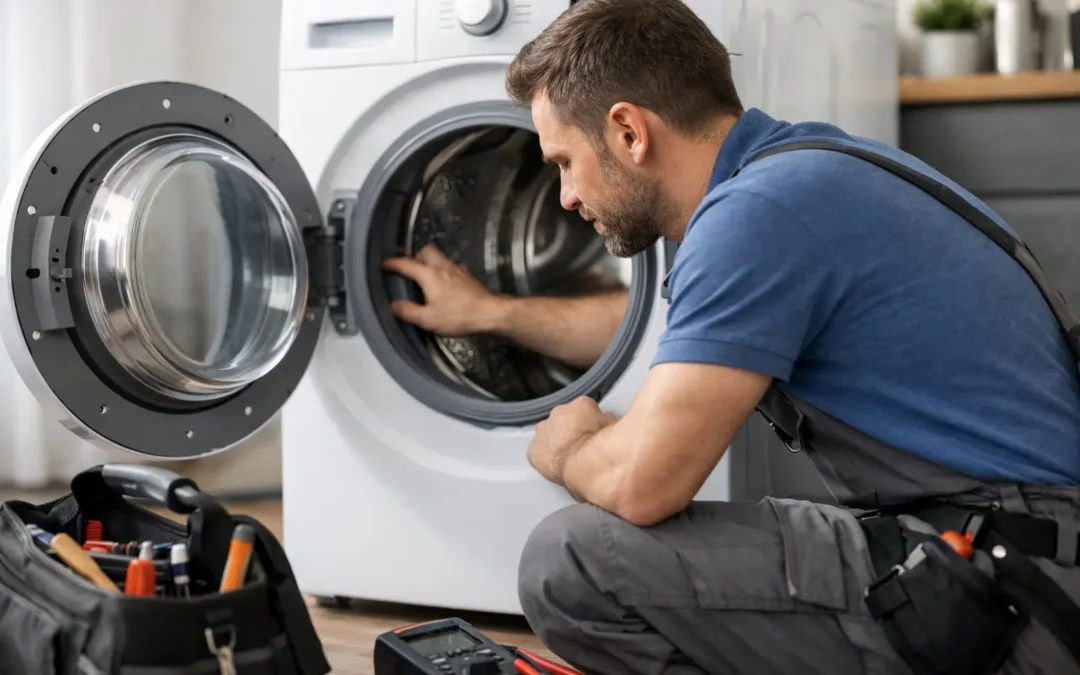
A washer full of wet clothes usually shows up at the worst possible time – right before work, before guests arrive, or in the middle of a packed week. If you are searching for how to fix a washer that won’t spin, the most important thing to know is that this symptom can come from a few very different problems. Some are simple, like an unbalanced load or a lid that is not closing properly. Others involve the drain system, motor, belt, or control board and need professional diagnosis.
The trick is not guessing. A washer that will not spin may still fill, agitate, and even sound normal for part of the cycle. That can make the problem seem minor when it is not. Starting with the right checks can save time, prevent damage, and help you decide whether this is a quick correction or a repair call.
How to fix a washer that won’t spin without making it worse
Before touching the machine, unplug it. If there is standing water in the tub, avoid forcing another cycle until you know whether the washer is draining correctly. A spin problem and a drain problem often show up together, and repeated attempts can strain the pump or motor.
If your washer is overloaded, stop there first. Heavy items like towels, blankets, or rugs can shift to one side and trigger the washer’s out-of-balance protection. Many newer machines will refuse to spin at full speed if the load is too uneven. Redistribute the clothing, remove a few heavy items, and try a drain and spin cycle again.
The next simple check is the lid or door. Top-load washers usually need the lid switch to engage before spinning. Front-load washers rely on the door lock assembly. If the machine thinks the door is open, it may wash but not spin. Look for a door that is not latching cleanly, a loose strike, or a delayed lock response.
Leveling also matters more than many homeowners expect. If the washer rocks on the floor, it may stop itself during spin to avoid excessive vibration. A machine that has shifted even slightly can start showing intermittent spin issues. This is especially common after moving, flooring work, or repeated heavy loads.
Why a washer won’t spin in the first place
A washer has to complete a chain of events before spin begins. It has to sense that the lid or door is secure, drain enough water, and then bring the basket up to speed safely. If any part of that sequence fails, the spin cycle may stop or never begin.
One of the most common causes is poor drainage. If water remains in the tub, many washers will not move into a high-speed spin. That could point to a clogged drain pump, a blocked filter, a kinked drain hose, or an internal obstruction like lint, coins, or fabric debris.
Another common issue is the lid switch or door lock. This is a safety feature, not a minor accessory. If it fails, the washer may act as though it is running normally until the spin portion of the cycle. At that point, it simply will not proceed.
Drive system problems are also possible. Depending on the washer design, the machine may use a belt, clutch, motor coupling, stator, rotor, or direct-drive motor components. When one of these parts wears out, the basket may struggle to spin, spin weakly, or not spin at all. In some cases, you may hear humming, grinding, or a burning smell.
Control issues can also be the reason. Modern washers rely on electronic boards, sensors, and communication between components. That is especially true with premium and high-efficiency models. A failed control board or sensor can interrupt the spin cycle even when the mechanical parts are still in good condition.
Safe checks you can try before calling for service
If the washer is not spinning, check the load first, then check whether the machine drained fully. If the clothes are soaked and there is visible water left in the tub, the problem may be more about draining than spinning. Listen for the drain pump. If it is silent, blocked, or only humming, that is a useful clue.
Inspect the drain hose behind the washer. It should not be crushed, sharply bent, or pushed too far down into the standpipe. Any of those conditions can interfere with draining and affect spin performance. If your washer model has an accessible drain filter, and your manufacturer allows owner cleaning, inspect it carefully. Be ready for water release if you open that area.
Try a smaller test load next. Washers can behave differently with a single bulky item than with a balanced mixed load. If the machine spins with a few light items but fails with towels or bedding, the issue may be load sensing, suspension wear, or a developing drive problem.
Pay attention to sounds. Clicking near the door can point to a lock issue. A motor running without basket movement can suggest a worn belt or coupling. Loud banging can indicate suspension or balance problems. No response at all during spin may point toward a control or electrical fault.
Error codes matter too. Many newer washers display a code when they detect a spin-related fault. That code does not always identify the exact failed part, but it narrows the diagnosis. If you see one, write it down before restarting the machine.
When DIY stops being the smart option
Some washer problems look simple from the outside but involve more than a reset or adjustment. If the washer repeatedly stops during spin, leaks during the cycle, smells hot, trips the breaker, or makes harsh grinding noises, it is time to stop testing it. Continuing to run the machine can lead to more expensive damage.
This is especially true for high-end and electronically controlled washers. Brands with advanced balancing systems, inverter motors, and integrated control boards require accurate diagnosis. Replacing parts based on guesswork often costs more than calling a qualified technician first.
Front-load washers can also present added complexity. Door lock assemblies, drain pumps, pressure sensors, and control boards all play a role in spin performance. On some models, even a small issue in one system can prevent the final spin entirely.
For property managers and landlords, speed matters as much as the repair itself. A washer that leaves clothes soaked creates immediate disruption for tenants and can easily turn into a larger maintenance complaint. Getting the unit diagnosed quickly reduces downtime and avoids repeated service visits for the wrong part.
What a professional will usually check
A proper diagnosis starts with confirming whether the washer is failing to spin, failing to drain, or both. From there, a technician will test the door or lid switch, inspect the pump and drain path, and evaluate whether the basket turns freely. They may also check for worn suspension components, broken belts, motor faults, or communication errors between the controls and drive system.
On premium appliances, diagnosis often includes manufacturer-specific test modes and electrical measurements. That is one reason luxury and built-in appliance service is not interchangeable with basic repair work. The symptom may be the same, but the correct repair process can be very different.
At Medvedkov Professional Services, that kind of diagnosis is part of taking ownership of the repair from start to finish. Customers do not need a temporary fix. They need a clear answer, the right part, and a repair that restores normal operation without extra stress.
How to prevent the next spin problem
Not every washer failure is preventable, but a few habits help. Avoid consistently overloading the drum. Wash heavy items in balanced loads. Check pockets for coins and small objects that can work into the drain system. If your model has a maintenance filter, clean it as recommended by the manufacturer.
It also helps to pay attention to early warning signs. A washer that has started shaking more than usual, pausing oddly before spin, or leaving clothes wetter than normal may be showing the first signs of a larger problem. Addressing those issues early is usually less disruptive than waiting for a complete spin failure.
If your washer won’t spin once, it may be a simple correction. If it keeps happening, the right move is a professional diagnosis. The goal is not just getting through one more load of laundry. It is getting the machine back to dependable operation so your routine can return to normal.