
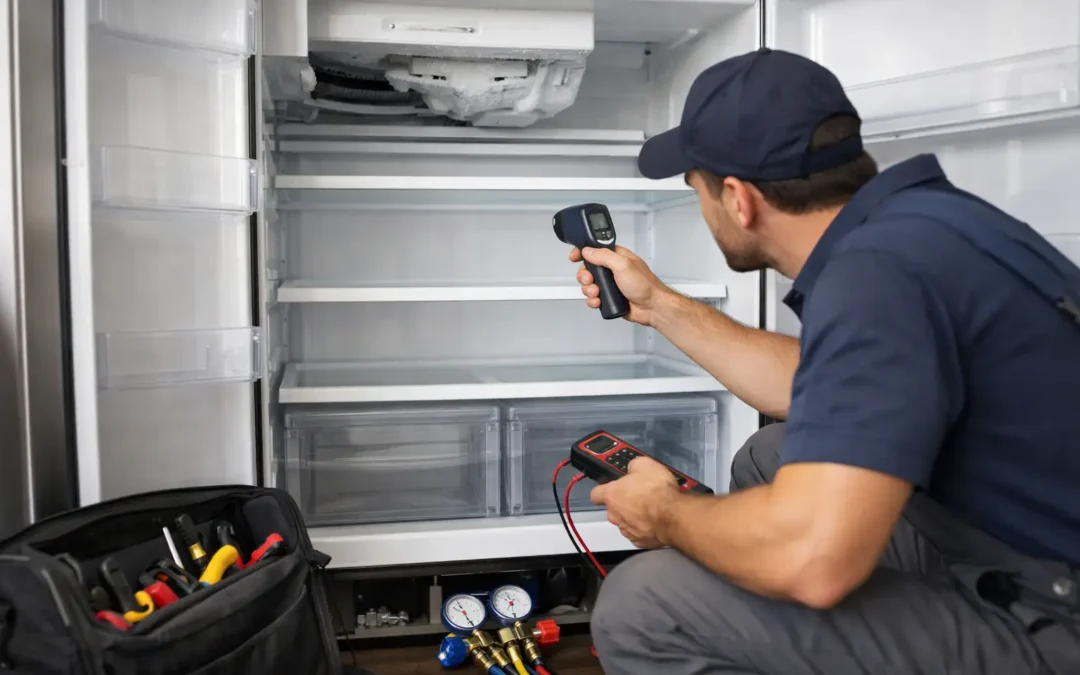
A refrigerator that suddenly stops keeping food cold is not a minor inconvenience. It can mean spoiled groceries, leaking water, and a bigger repair bill if the problem is left alone. When customers call for refrigerator not cooling repair, the biggest concern is usually the same – how fast can this be diagnosed and fixed before food is lost and the issue gets worse?
Some cooling problems are simple. Others point to failed components, airflow restrictions, sealed system trouble, or control failures that need professional service. The key is knowing the difference early, especially if the unit is a built-in refrigerator or a premium brand with specialized parts and more complex cooling systems.
When refrigerator not cooling repair becomes urgent
If the refrigerator section feels warm but the freezer still seems cold, the issue may be airflow-related rather than a total cooling failure. If both sections are warming up, the problem is usually more serious. Either way, time matters.
A refrigerator should generally hold around 37 to 40 degrees, while the freezer should stay near 0 degrees. Once temperatures rise above safe levels, food quality drops quickly. Milk, meat, leftovers, and medications stored inside may no longer be safe even if the refrigerator starts cooling again later.
The situation becomes more urgent if you notice a burning smell, repeated clicking, heavy frost buildup, puddling water, or a compressor that runs constantly without cooling. Those are signs the appliance is struggling and may be heading toward a more expensive failure.
Common causes of a refrigerator not cooling
The cause depends on the design of the refrigerator, its age, and whether it is a freestanding or built-in model. A basic top-freezer unit and an integrated luxury refrigerator can show the same symptom while having very different failures behind it.
Dirty condenser coils
Condenser coils release heat from the refrigerator. When they are packed with dust, pet hair, or kitchen debris, the system cannot shed heat efficiently. That forces the compressor to work harder and can lead to weak cooling or no cooling at all.
This is one of the more common issues, especially in homes with pets or in properties where routine maintenance has been delayed. In some cases, cleaning the coils improves performance. In others, long-term strain has already damaged other components.
Evaporator fan or condenser fan failure
Fans move air where it needs to go. The evaporator fan circulates cold air through the refrigerator and freezer compartments, while the condenser fan helps cool the sealed system components.
If a fan motor fails, you may hear unusual noises, or you may hear nothing at all when the unit should be running. A refrigerator can still appear to be on, with lights and display functions working, while the internal airflow is not doing its job.
Frosted evaporator coils
When the defrost system stops working correctly, ice can build up around the evaporator coils and block airflow. That often leads to a freezer that seems somewhat cold while the refrigerator compartment warms up first.
This is why quick diagnosis matters. The visible symptom is poor cooling, but the root cause could be a failed heater, thermostat, sensor, or control board. Replacing the wrong part wastes time and money.
Thermostat, sensor, or control board problems
Modern refrigerators rely on electronic controls to manage temperature, fan operation, and defrost cycles. If a sensor gives bad readings or a control board stops responding properly, the refrigerator may not cool as it should even though no mechanical part has fully failed.
This is especially common in newer appliances and premium brands with advanced controls, touch panels, and variable-speed systems. These repairs often require model-specific testing rather than guesswork.
Compressor or start device issues
The compressor is the heart of the cooling system. If it cannot start, cannot run properly, or is no longer compressing refrigerant effectively, cooling performance drops fast.
Sometimes the problem is a failed start relay or capacitor. Sometimes the compressor itself is failing. The trade-off here is important: a smaller electrical component repair may be straightforward, while a sealed system repair is more involved and should only be handled by a qualified technician.
Sealed system or refrigerant problems
If the refrigerator has a refrigerant leak or restriction in the sealed system, it may run continuously but never reach the correct temperature. These issues are more technical, more expensive, and more common in aging units or appliances with prior service history.
Built-in refrigerators and luxury models often justify this level of repair because replacement costs are high. On older basic units, it may make more sense to compare repair cost against replacement value.
What to do before you call for service
There are a few basic checks that can help rule out a simple issue. Make sure the unit has power, the temperature settings were not changed accidentally, and the doors are closing fully. A torn gasket, overloaded shelves, or food blocking vents can create cooling complaints that look worse than they are.
It also helps to check whether the condenser coils are visibly dirty and whether the appliance has enough clearance for airflow. If the refrigerator was recently moved, installed, or loaded heavily with room-temperature groceries, performance may be temporarily affected.
That said, if the refrigerator is warm, food is at risk, or the appliance is making unusual noises, it is usually better to schedule service quickly instead of spending hours troubleshooting. Delays can turn a manageable repair into a compressor or control failure.
Why diagnosis matters more than quick guesses
Refrigerators often fail in ways that overlap. Poor airflow, a defrost issue, a control problem, and a sealed system issue can all produce the same customer complaint: the refrigerator is not cooling.
That is why professional diagnosis matters. Accurate testing saves time, avoids unnecessary parts replacement, and gives you a clearer answer on whether the repair is practical. This is even more important with brands like Sub-Zero, Thermador, Viking, Miele, Monogram, JennAir, Bosch, and other high-end built-in systems where access, controls, and refrigeration components are more specialized.
For homeowners, property managers, and real estate professionals, the goal is not just to get the appliance running again. It is to get a dependable repair with clear communication, the right parts, and a realistic timeline.
Repair or replace?
It depends on the refrigerator, the failure, and the value of the appliance. A fan motor, thermostat, defrost part, or start device repair is often worth doing if the rest of the unit is in good condition. A sealed system repair on an older entry-level refrigerator may be harder to justify.
The equation changes with premium appliances. Replacing a built-in refrigerator can be significantly more expensive than repairing it, especially when cabinetry, panels, and installation are part of the project. In those cases, expert refrigerator not cooling repair is often the more practical path.
Age also matters, but it is not the only factor. A well-maintained luxury refrigerator may still be a strong repair candidate after many years, while a lower-cost unit with repeated problems may not be.
What professional service should look like
When a refrigerator stops cooling, customers need more than a rough estimate and a vague service window. They need a technician who can diagnose the issue correctly, explain the problem in plain language, and handle the repair process from start to finish.
That includes checking temperatures, testing electrical components, evaluating airflow, inspecting frost patterns, and determining whether the problem is mechanical, electrical, or sealed-system related. It also means setting expectations clearly if parts need to be ordered or if the repair involves a premium brand with specialized components.
For customers in Washington, especially those managing busy households, rental properties, or high-value kitchens, fast response and strong communication make a real difference. Medvedkov Professional Services focuses on that full process – diagnosis, parts coordination, repair completion, and support backed by a six-month warranty on completed repairs.
Preventing the next cooling failure
Not every breakdown can be prevented, but regular maintenance helps. Keeping coils clean, making sure doors seal properly, avoiding blocked air vents, and addressing unusual sounds early can reduce wear on the system.
For built-in and luxury refrigerators, preventive service is even more valuable. These appliances are designed for performance and longevity, but they also depend on proper airflow, clean components, and precise controls. Catching a weak fan motor or defrost issue early can prevent a full no-cooling event later.
If your refrigerator is running but not keeping food cold, trust the symptom. Fast action protects your food, limits damage, and gives you the best chance of a straightforward repair instead of a much larger problem.