
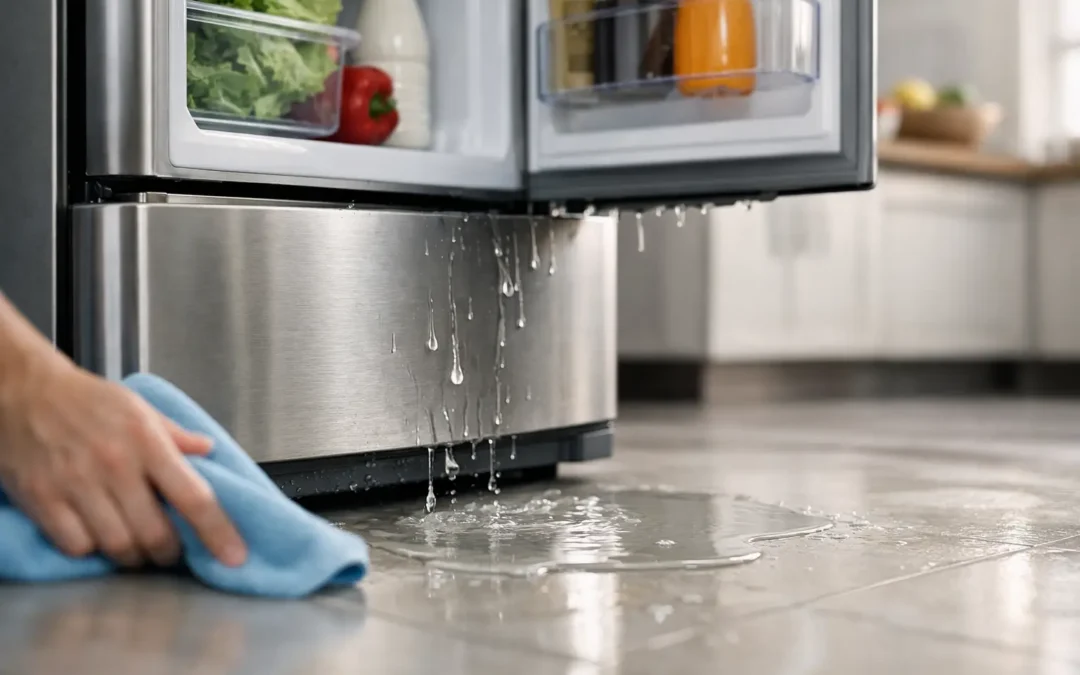
You notice a small puddle in front of the refrigerator, wipe it up, and hope it was a one-time spill. Then it comes back. If you are asking, why is my fridge leaking water, the issue usually points to a drainage problem, a water supply issue, or excess moisture building up where it should not.
Some leaks are minor and easy to identify. Others are tied to hidden components behind panels, under the unit, or inside the freezer section. The right next step depends on where the water is showing up and what type of refrigerator you have.
Why is my fridge leaking water? Start with where the water is appearing
The location of the leak tells you a lot. Water under the crisper drawers suggests a different problem than water pooling on the floor in front of the appliance. A leak from the back of the refrigerator often points to the water line or drain pan area. Water dripping from the ceiling of the fresh food section may be tied to an iced-over defrost drain or airflow problem.
If your refrigerator has an ice maker or water dispenser, the diagnosis changes as well. Built-in and luxury refrigerators can have more complex water routing, filtration systems, and concealed components, so the source is not always obvious without disassembly.
A clogged defrost drain is one of the most common causes
In many refrigerators, melting frost drains through a defrost channel and flows into a pan underneath the appliance, where it evaporates. When that drain gets clogged with debris, food particles, or ice, the water has nowhere to go. It backs up and ends up inside the refrigerator or freezer, and eventually on the floor.
This is especially common when you see water collecting under drawers, a sheet of ice on the freezer floor, or intermittent leaking that seems worse after the unit runs through a defrost cycle. The leak may come and go, which makes it easy to misread as a spill.
A partially blocked drain can also create repeat problems. Even if the water seems to stop for a few days, the restriction may still be there. That is why recurring leaks often need a proper cleaning rather than a temporary fix.
Why defrost drain problems matter more than they seem
At first glance, this can look like a nuisance rather than a repair issue. But standing water inside a refrigerator can damage shelves, insulation, flooring, and nearby cabinetry. In built-in kitchens, that risk is higher because moisture can spread where you cannot see it right away.
If the drain line keeps freezing, there may be an underlying issue with the defrost system, air circulation, or door sealing. That is where a professional diagnosis becomes worthwhile.
A damaged or loose water supply line can leak behind the fridge
If your refrigerator has a water dispenser or ice maker, a leaking water supply line is another likely cause. The connection can loosen over time, the tubing can crack, or the valve can develop a slow drip. In those cases, the water usually appears behind the unit and gradually works its way forward onto the floor.
This kind of leak can be easy to miss at first. You may only notice warped flooring, a musty smell, or water reappearing after you clean it up. If the leak is active, it should be addressed quickly. Supply line leaks do not usually resolve on their own, and continued moisture can damage flooring and wall materials.
The trade-off here is simple. A basic connection issue may be straightforward, but older lines, kinked tubing, or built-in refrigerator installations often require more care. Pulling out a standard refrigerator is one thing. Moving a heavy integrated or luxury unit without damaging surrounding cabinetry is another.
The drain pan may be cracked, shifted, or overflowing
Most refrigerators collect defrost water in a drain pan underneath the appliance. Under normal conditions, that water evaporates before the pan fills. If the pan is cracked, not seated correctly, or if the refrigerator is producing more water than normal, you may see leaking underneath.
This issue tends to show up as water near the front or center of the appliance base. In some cases, the pan itself is fine, but the refrigerator is not leveling properly, so water is not draining the way it should. In others, excess frost or humidity causes more water to enter the pan than expected.
This is one of those situations where it depends on the model. Some drain pans are easy to inspect. Others are tucked into areas that are not safely accessible without removing panels or moving the unit.
Door gasket problems can create excess condensation
A worn, torn, or loose door gasket lets warm air enter the refrigerator. When that happens, condensation increases, frost can build up in the wrong places, and water may collect inside the unit or drip onto the floor.
You might also notice the refrigerator running longer than usual, inconsistent temperatures, or moisture beads along shelves and walls. On premium built-in models, poor sealing can affect temperature stability more noticeably because those units are designed for tighter performance tolerances.
A gasket problem may not look like a leak at first, but it often turns into one. If warm air intrusion continues, you can end up with drain freeze-ups, water under drawers, and more strain on the cooling system.
The refrigerator may not be level
A refrigerator should sit level, or with a slight tilt depending on the manufacturer design, so doors close properly and water drains correctly. If the unit leans too far forward or to one side, water can collect where it should not.
This is more common after a recent move, flooring change, installation, or cleaning behind the appliance. Even a small shift can affect drainage and door sealing. It is not the most dramatic cause, but it is a real one, especially when the leak seems minor and there are no signs of a broken part.
The challenge is that leveling issues can exist alongside another problem. A fridge may be slightly off balance and also have a restricted drain. That is why repeat leaks should not be dismissed after one quick adjustment.
High humidity or frequent door opening can make the problem worse
Not every water issue starts with a failed part. In some homes, especially during warmer months or in busy households, heavy use and high indoor humidity can create extra condensation. If doors are not closing fully, or if they are opened often, moisture buildup may increase enough to show up as water inside the unit.
That said, normal use should not create steady puddles on your floor. If it does, there is usually an underlying mechanical or sealing problem that needs attention. Humidity may worsen the symptoms, but it is rarely the only cause.
What to check before calling for service
If you need to protect the floor and reduce further damage, start by drying the area and checking whether the leak is coming from inside the refrigerator, underneath it, or from the back. Look for water under produce drawers, ice on the freezer floor, or dripping near the water line connection.
You can also confirm whether the doors are closing fully and whether the gasket appears torn or loose. If your model has a water dispenser or ice maker, check for signs of moisture around the supply line area. Avoid forcing panels open or moving a heavy built-in refrigerator yourself, especially if the appliance is installed tightly between cabinets.
For many homeowners and property managers, this is the point where professional service saves time. A leak can come from more than one source, and guessing wrong often delays the real repair.
When a leaking fridge needs professional repair
If the water keeps returning, if you see ice buildup along with leaking, or if the unit has a dispenser, ice maker, or built-in water system, it is smart to have it diagnosed properly. The same goes for luxury brands and integrated refrigerators, where access, parts, and system design are more specialized.
Medvedkov Professional Services handles refrigerator leaks across standard and high-end models, including built-in units that need careful diagnosis and repair. For customers in Washington who need a fast, reliable solution, the priority is simple: stop the leak, protect the appliance, and fix the real cause without adding more stress to your day.
A refrigerator leak is rarely something to ignore. Even when the puddle looks small, the problem behind it may not be. The sooner the source is identified, the easier it is to prevent damage and get your kitchen back to normal.