
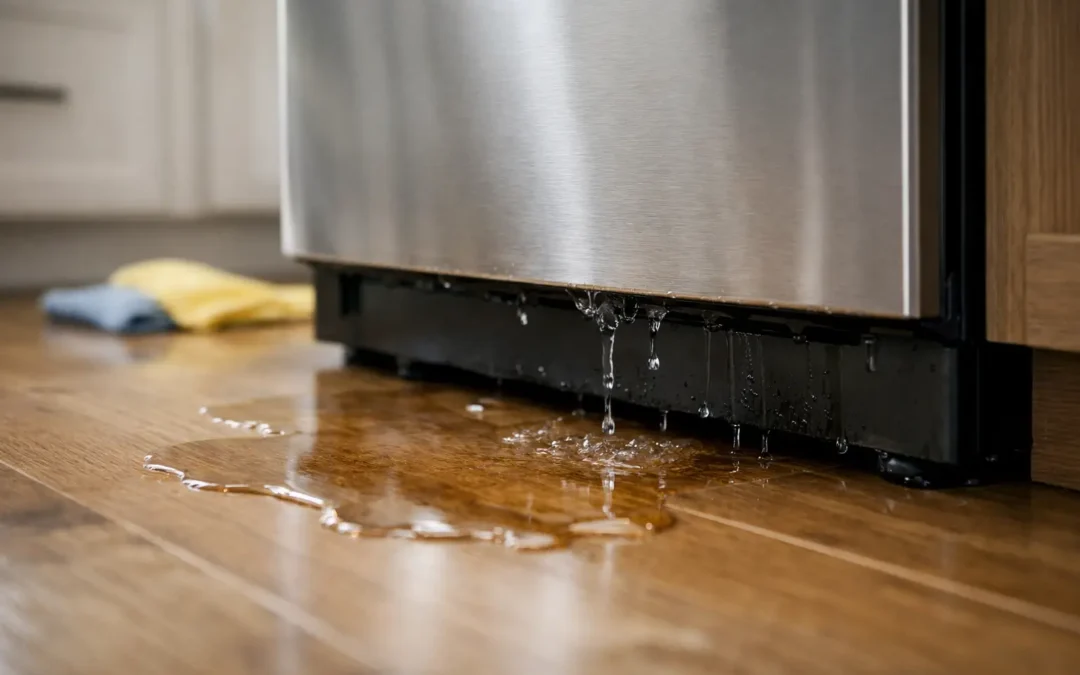
A puddle under the dishwasher usually shows up at the worst possible time – after dinner, before guests arrive, or right as you are heading out the door. If your dishwasher leaking from bottom has become a repeat problem, the goal is not just to mop it up. The real issue is finding the source quickly before water damages flooring, cabinets, or the subfloor below.
Some leaks are caused by simple wear, like a door gasket that no longer seals properly. Others point to a failing pump, cracked hose, blocked drain path, or installation issue. The tricky part is that water often travels before it becomes visible, so the spot where you see it is not always the spot where it started.
Why a dishwasher leaking from bottom should be handled quickly
Even a small leak can turn into an expensive repair if it is ignored. Hardwood can swell, laminate can buckle, and moisture trapped under the machine can create hidden damage you do not notice until much later. For property managers and homeowners alike, a dishwasher leak is rarely a problem that improves on its own.
There is also the appliance itself to consider. Modern dishwashers, especially premium built-in models from brands like Miele, Bosch, Thermador, and Fisher & Paykel, rely on tight seals, properly calibrated water levels, and clean drain systems. When one part starts failing, it can put strain on others. A leak at the bottom may be the first visible sign that something deeper is off.
The most common causes of a dishwasher leaking from bottom
One of the most common causes is a worn door gasket. The gasket is the rubber seal around the door that keeps wash water inside the tub. Over time, it can crack, flatten, or pull away from the frame. When that happens, water escapes during the wash cycle and runs down to the floor, making it look like the leak is coming from underneath.
A damaged lower door seal or sweep can cause the same symptom. This part sits at the bottom edge of the door and helps control splash-out. If it is torn, warped, or coated with heavy buildup, water may push past it during operation.
Another frequent issue is an overfilled tub. If the float switch sticks or the water inlet valve does not close properly, too much water enters the dishwasher. Once the water level rises too high, it can leak from the front or spill into the base. This tends to happen intermittently, which makes it harder for homeowners to catch.
Drain hose problems are also high on the list. A loose connection, split hose, or clog can send water into the base of the unit or onto the floor during drain-out. In some cases, the hose itself is fine, but the clamp has loosened enough to allow a slow leak.
Then there is the circulation pump or drain pump assembly. These components sit lower in the dishwasher and use seals that can wear out over time. When a pump seal starts failing, water often leaks directly underneath the machine. That kind of leak usually requires disassembly and accurate diagnosis, especially on higher-end appliances with more complex layouts.
Detergent can play a role too. Using regular dish soap instead of dishwasher detergent creates excessive suds, and even the correct detergent can cause trouble if too much is used. Suds force water into places it should not go, which may look like a mechanical failure when the real cause is product misuse.
What to check before scheduling repair
Start with the obvious and safe checks. If you see active leaking, stop the cycle and turn off power to the dishwasher if it can be done safely. Do not keep running test loads while water is collecting underneath. That usually makes the cleanup bigger and the diagnosis less clear.
Next, inspect the door area. Look for tears, flattening, or debris on the gasket. Food residue along the seal or tub edge can prevent a proper seal even when the gasket itself is still usable. If the leak appears mainly at the front corners, the door seal is a strong suspect.
Check how the dishwasher is loaded. Large pans, baking sheets, or tall items can deflect spray directly toward the door. That does not happen in every machine, but it is common enough that it is worth ruling out. If the leak only happens with certain loads, the problem may be water direction rather than a failed part.
You should also look under the sink where the dishwasher hose connections are accessible. A slow drip from the drain hose or water supply line can travel along cabinetry and show up under the dishwasher, which creates a false impression about the source.
If the appliance was recently installed or moved, level matters. A dishwasher that leans too far forward can push water toward the door area and cause leaking at the bottom edge. Installation problems are especially relevant in remodeled kitchens and with panel-ready or integrated units where alignment has to be precise.
When the problem is more than a simple seal
If the leak is coming from the center underside, appears during draining, or collects in the base pan, the issue is usually more technical. A cracked sump, failing pump seal, damaged internal hose, or drain system defect may be involved. These are not parts you want guessed at, especially if the machine is a premium built-in model.
Luxury dishwashers often have features like leak sensors, flood switches, diverter assemblies, multiple wash zones, or drawer-style designs that change how diagnosis should be approached. A quick DIY part swap can waste time and money if the real cause is elsewhere. In some cases, the dishwasher may shut down with standing water because a flood protection system has already been triggered.
That is one reason accurate diagnosis matters. Replacing a gasket is straightforward when the gasket is truly the problem. It does not help if the machine is overfilling because of a valve issue or leaking from the circulation system below.
Signs it is time to call a professional
A one-time splash-out from poor loading is one thing. Repeated leaking, water under the unit, or signs of cabinet and floor damage are different. If you notice any of those, professional service is the safer move.
You should also schedule service if the dishwasher leaks only during certain parts of the cycle, trips a breaker, leaves water in the bottom, or shows error codes. Those symptoms often point to a combination problem rather than a single visible failure.
For homeowners with premium brands, calling a company that regularly services high-end and built-in appliances is especially important. Access, parts, and diagnostic procedures vary by manufacturer, and not every appliance company is equipped for that level of work. Medvedkov Professional Services handles both standard and luxury dishwashers, which helps shorten the time between diagnosis and repair.
What professional dishwasher leak diagnosis usually involves
A proper service visit is not just a visual inspection. The technician will usually confirm where the water is originating, not just where it is collecting. That may involve checking the door seal, float system, inlet valve behavior, sump area, internal hoses, pump components, and drain path.
If needed, the dishwasher may be partially removed to inspect underneath. On built-in units, that has to be done carefully to avoid damaging surrounding cabinetry, flooring, or custom panels. Once the source is confirmed, the next step is deciding whether repair is practical and cost-effective.
In many cases, it is. Door seal replacements, hose repairs, clamp corrections, drain component service, and pump-related repairs are common. But it depends on the machine’s age, brand, condition, and the extent of any water damage around it.
How to reduce the chances of another leak
Routine care helps more than many homeowners realize. Keeping the filter clean, using the right detergent, avoiding overloading, and paying attention to early warning signs can prevent a small issue from becoming a larger one. If the door feels harder to close, the dishwasher starts smelling musty, or you see occasional moisture at the toe kick, those are worth addressing early.
It also helps to avoid delaying service on minor leaks. A dishwasher rarely leaks less over time. More often, the opposite happens. What starts as a small seal problem can turn into a failed floor, damaged cabinets, or a more involved appliance repair.
If your dishwasher is leaking from the bottom, the best next step is a clear diagnosis and a repair plan that solves the actual cause. Fast action protects both the appliance and the kitchen around it, and that is almost always cheaper than waiting for the next puddle.