
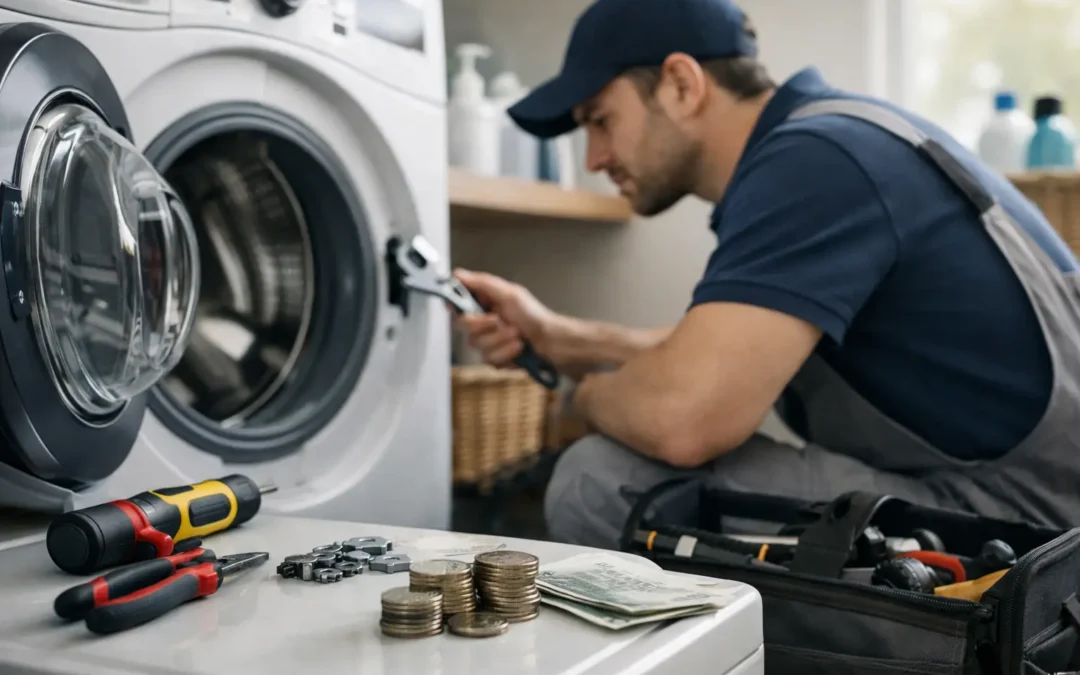
A washer usually picks the worst possible time to stop working – right before a workweek, during a tenant turnover, or when a leaking machine threatens the laundry room floor. When that happens, washer repair cost becomes the first question, and for good reason. Most people are not looking for theory. They want to know what the repair is likely to cost, whether it makes sense to fix, and how to avoid wasting time on the wrong solution.
What affects washer repair cost?
Washer repair cost is not one flat number because the final bill depends on three things more than anything else: the failed part, the labor involved, and the type of machine being serviced. A simple drain pump replacement is a very different job from tracking down an intermittent control board failure in a high-end front-load unit.
Brand matters too. Standard residential washers are often more straightforward and parts are usually easier to source. Premium models, built-in laundry systems, and specialty machines can take more diagnostic time and may require more expensive manufacturer-specific parts. If a washer is stacked, installed in a tight closet, or integrated into cabinetry, labor can also increase because access is harder.
Service timing can change the price as well. Emergency service, after-hours availability, and rush parts orders may raise the total. For homeowners and property managers, speed is often worth it when laundry is backed up or a leak is creating a bigger risk.
Typical washer repair cost by problem
Most washer repairs fall into a broad but predictable range. In many cases, the total washer repair cost lands somewhere between about $150 and $500, depending on diagnosis, labor, and parts. Some minor repairs may come in lower. More complex electronic or mechanical failures can exceed that range.
Drain pump and drainage issues
If the washer will not drain, leaves water in the tub, or stops mid-cycle, the problem may be the drain pump, a clog, or a related component. These repairs are often moderate in cost because the diagnosis is usually clear, but the exact price depends on whether the pump has failed or if the issue is tied to a wiring or control problem.
Door lock and lid switch problems
A front-load washer that will not start may have a faulty door lock. A top-load model may have a lid switch issue. These are often manageable repairs and tend to be less expensive than major motor or board failures. Even so, labor still matters, especially if disassembly is time-consuming.
Water inlet valve and fill problems
If the washer fills slowly, overfills, or does not fill at all, the water inlet valve may be at fault. This type of repair is often more affordable than major mechanical work, but it can overlap with pressure switch or control board issues. That is why a proper diagnosis matters before anyone quotes a number too confidently.
Belt, motor, and drive system repairs
When the washer will not spin, makes a grinding sound, or struggles during agitation, the issue may involve the belt, motor coupling, stator, clutch, transmission, or another drive-related part. This is where washer repair cost can rise quickly. Some drive system repairs are reasonable. Others approach the point where replacement should be considered.
Control board and electronic failures
Electronic problems can be some of the most frustrating and expensive washer issues. If the machine shuts off randomly, throws communication errors, or behaves unpredictably, the main control or user interface may be failing. On newer or higher-end washers, boards can be costly, and some models require brand-specific parts that are not cheap.
Bearing and tub problems
If the washer is extremely loud during spin or there is play in the drum, worn bearings or tub issues may be the cause. These repairs are often among the most expensive because they involve significant labor and, in some models, major component replacement. At that point, the right decision depends on the washer’s age, brand, and overall condition.
Front-load vs. top-load repair costs
Front-load washers often cost more to repair than top-load models. They use more complex suspension systems, door locks, control assemblies, and sealing components. They are efficient and popular, but repairs can be more involved.
Top-load machines are often simpler, especially older models with fewer electronic features. That does not mean every top-load repair is cheap, but in general they can be faster to diagnose and more economical to fix.
If you own a premium washer from a luxury brand, cost can increase regardless of style. Higher-end appliances often justify that expense because the equipment itself is a larger investment, but the repair should still be evaluated case by case.
When repair makes sense and when replacement is smarter
The biggest mistake people make is asking only, “How much is the repair?” The better question is, “How does the repair cost compare to the value and remaining life of the machine?”
If the washer is relatively new, in otherwise good condition, and the problem is isolated, repair is usually the smart move. Replacing a pump, valve, latch, or similar part is often far less expensive than buying a new machine, arranging delivery, and dealing with installation.
If the washer is older and facing a major failure like bearings, transmission problems, or repeated electronic issues, replacement may be more practical. That is especially true if the repair cost is approaching half the price of a comparable new unit. It also depends on usage. A heavily used rental property washer may justify a different decision than a lightly used machine in a single-person home.
For premium appliances, the equation changes a bit. A high-end washer may be worth repairing even at a higher cost because replacement pricing is much steeper and performance expectations are different. Experienced service companies look at the full picture, not just the immediate invoice.
Why diagnosis matters before quoting a price
Many washer symptoms overlap. A machine that will not spin could have a lid switch problem, a belt issue, a motor fault, a control issue, or even a drain problem that is preventing the cycle from advancing. A leak could come from a hose, pump, dispenser, door boot, or tub seal.
That is why accurate diagnosis is the first real step. Without it, lowball estimates are just guesses. A professional technician should identify the actual failure, explain the repair clearly, and tell you whether the fix is worthwhile before work moves forward.
This is especially important for property managers, landlords, and busy homeowners who do not have time for repeat visits or partial fixes. The goal is not just to get the washer running for one more cycle. The goal is to resolve the problem correctly and reduce the chance of another service call next week.
What can increase the final bill?
Some cost factors are easy to overlook. Parts availability is one of them. If the needed part is backordered or limited to manufacturer channels, the repair may take longer and cost more. Installation conditions matter too. A washer in a narrow laundry closet, upstairs with difficult access, or stacked under a dryer can require extra labor.
Brand complexity is another major factor. Newer machines often include advanced sensors, inverter systems, and electronic controls that improve performance but make diagnosis more specialized. In those cases, choosing a service company with broad appliance experience matters. Companies that work on both standard and luxury brands are typically better equipped to diagnose unusual failures and manage the full repair process without unnecessary delays.
How to keep washer repair cost from climbing
Not every breakdown is preventable, but a few habits can reduce the chances of a bigger repair. Avoid overloading the machine, use the right detergent type and amount, check pockets for hard objects, and pay attention to small warning signs like vibration, slow draining, or minor leaks. Small issues are usually less expensive to handle before they turn into motor damage, water damage, or control failures.
It also helps to act quickly when something feels off. A washer that keeps running while making loud noises is rarely fixing itself. Waiting can turn a moderate repair into a much larger one.
What to expect from a professional service visit
A good service experience should feel straightforward. The technician should inspect the washer, confirm the failure, explain the recommended repair, and communicate pricing clearly. If parts are needed, you should know what is being ordered and what the timeline looks like.
For customers in Washington, especially those managing busy households or rental properties, that kind of communication matters as much as the repair itself. Medvedkov Professional Services handles diagnosis, parts procurement, repair completion, and customer communication as one process, which helps reduce delays and confusion when a washer is down.
The right repair decision is not always the cheapest one on paper. It is the one that restores reliability, protects your appliance investment, and solves the problem without adding more stress to your week. If your washer is acting up, the fastest path to clarity is a professional diagnosis and a direct answer based on the machine in front of you.