
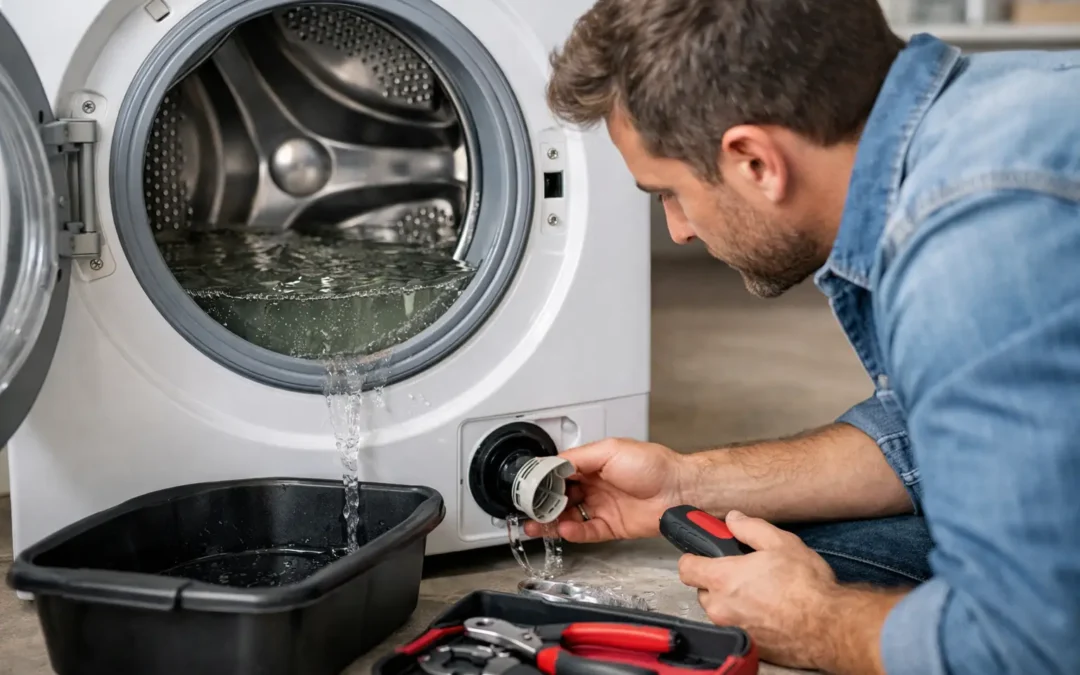
A washer full of water is never a small inconvenience. It stops laundry, can leave clothes soaked for hours, and sometimes points to a larger mechanical problem. If you are searching for how to fix a washer that won’t drain, the right next step depends on whether the issue is a simple blockage or a component that has failed.
In many cases, the machine is not actually “dead.” It is being stopped by a clogged drain hose, a blocked pump filter, an unbalanced load, or a lid or door switch that is not signaling correctly. Other times, the drain pump, control board, or internal wiring is the real problem. Knowing the difference can save time and help you avoid water damage or a repeat breakdown.
How to fix a washer that won’t drain safely
Before touching the washer, unplug it. If there is standing water in the tub, expect a mess once you open any drain point. Use towels, a shallow pan, or a wet/dry vacuum if you have one. If your washer is stacked, built in tightly, or connected in a way that makes access difficult, it is often smarter to stop there and schedule service rather than risk damaging flooring, cabinetry, or the appliance itself.
Start with the simplest question: is the washer trying to drain and failing, or is it not entering the drain cycle at all? A humming sound with no water movement often points to a blocked pump or stuck impeller. Silence during the drain portion may suggest an electrical or control issue.
Check for a paused cycle or load issue
Some washers will stop mid-cycle if the load is severely unbalanced. Bulky items like blankets, rugs, or a single heavy towel can shift to one side and interrupt spinning and draining. Redistribute the load, close the lid or door firmly, and try a drain and spin cycle.
This may sound basic, but it is a common cause, especially on high-efficiency machines that are more sensitive to balance and water-level readings.
Inspect the drain hose
A kinked or crushed drain hose is one of the fastest fixes. Pull the washer forward carefully and inspect the hose behind the machine. If the hose is pinched against the wall or bent sharply, water may not be able to leave the tub.
If the hose looks fine externally, disconnect it and check for lint, debris, or small clothing items causing a blockage. Also make sure the standpipe or household drain is not backing up. In some homes, the washer is working properly but the plumbing line is clogged, which creates the same symptom from the user’s perspective.
Clean the pump filter if your model has one
Many front-load washers and some top-load models have an accessible pump filter. This filter can trap coins, hairpins, lint buildup, pet hair, sock fragments, and other debris that prevents proper draining.
Open the access panel, place towels underneath, and drain slowly if there is a small emergency drain tube. Then remove the filter and clean it thoroughly. If you find heavy buildup or damage inside the housing, the blockage may have been there for a while.
A clean filter can restore normal operation immediately, but if the washer still will not drain, the pump itself may be jammed or failing.
Common reasons a washer won’t drain
When homeowners ask how to fix a washer that won’t drain, the real issue is usually one of a few repeat failures. The cause matters because some repairs are straightforward and some require disassembly, electrical testing, or brand-specific parts.
Clogged drain pump
The drain pump is responsible for moving water out of the tub. If it is blocked by fabric, debris, or buildup, it may hum, buzz, or make grinding noises without actually draining. In some cases, the impeller breaks or loosens and the pump runs without moving water effectively.
A clogged pump can sometimes be cleared, but a damaged pump usually needs replacement. Continuing to run the washer in this condition can overheat the component and create a more expensive repair.
Faulty lid switch or door lock
Top-load washers often rely on a lid switch to confirm the lid is closed before spinning or draining. Front-load machines use a door lock assembly for a similar purpose. If that switch or lock fails, the washer may stop before the drain and spin cycle even if every other part is working.
This is one of those issues that can look like a drainage problem but is actually a safety interlock failure. The washer may fill and wash normally, then leave water in the tub because it never receives permission to continue the cycle.
Control board or timer problems
On newer washers, drainage is controlled through electronic boards rather than simple mechanical timers. If the board does not send power to the drain pump at the right time, the machine may sit full of water with no obvious blockage.
This is especially relevant on premium appliances with more advanced sensors and cycle logic. These machines often need accurate diagnosis rather than guesswork. Replacing parts one by one can get expensive quickly.
Clogged household drain line
Sometimes the washer drains, but the home’s drain line cannot keep up. Water may back into the standpipe, overflow, or return toward the washer. If more than one plumbing fixture is draining slowly, the issue may be in the home’s plumbing rather than the appliance.
That distinction matters because appliance repair and drain cleaning are different services. A good technician will tell you which side of the problem you are dealing with.
When DIY stops being the right move
There is a difference between checking a hose and taking apart a washer cabinet. If the machine is still full of water after the basic steps, or if you notice burning smells, repeated error codes, leaking under the unit, or loud grinding during drain, it is time for professional diagnosis.
This is even more important with high-end brands and built-in laundry setups. Premium washers often use proprietary components, tighter internal layouts, and more advanced electronics. A wrong repair can turn a drainage problem into a control issue, a leak, or a damaged panel.
For property managers and busy homeowners, speed matters too. A washer that stays out of service can affect tenants, delay turnover, or disrupt a household for days. In those situations, a service call is often the fastest path to resolution.
How a professional diagnoses a washer that won’t drain
A proper service visit should not start with random part replacement. The technician should verify whether the drain pump is receiving power, inspect for hose and filter restrictions, test the lid switch or door lock, and confirm whether the control is advancing through the cycle correctly.
If the washer is a premium model, diagnosis may also involve reading stored fault codes and checking manufacturer-specific service procedures. That matters because two machines can show the same symptom for very different reasons.
At Medvedkov Professional Services, this kind of repair is approached as a full process, not just a quick guess at the failed part. That means identifying the cause, sourcing the right component if needed, and completing the repair with clear communication so the customer knows what happened and what comes next.
Preventing future drainage problems
The best prevention is simple consistency. Check pockets before washing, avoid overloading the drum, and clean the pump filter when your model recommends it. If you wash pet bedding, rugs, or heavily soiled work clothes, inspect the filter more often because those loads create more debris.
It also helps to pay attention to early warning signs. Slower draining, musty odors, standing water under the door seal, or a washer that needs a second spin cycle are all signs that a small drainage issue may already be developing.
If your washer is located in a laundry room with limited ventilation or sees heavy weekly use, routine service can make sense before a full failure happens. That is particularly true for larger households and rental properties where machines are under more stress.
What to do right now if your washer still won’t drain
If you have checked the load, inspected the hose, and cleaned the accessible filter but water is still sitting in the tub, stop running repeated cycles. Repeated attempts can strain the pump, overheat components, and increase the chance of a leak.
Instead, remove as much water as you safely can, leave the machine unplugged, and arrange for a qualified repair. A washer that will not drain is often fixable, but the right fix depends on what failed. Getting it diagnosed correctly the first time is usually the fastest way to get your laundry routine back without added damage or unnecessary cost.
A washer problem always feels urgent because it interrupts the normal rhythm of the home. The good news is that most drainage failures have a clear cause, and once that cause is identified, the path forward is usually straightforward.