
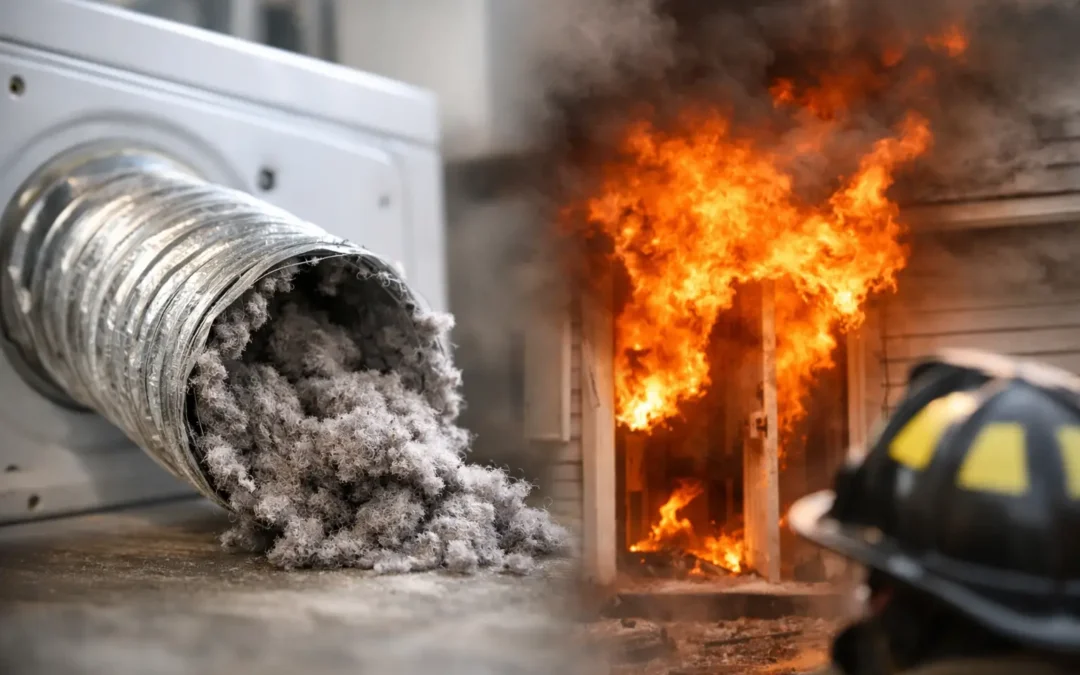
That load of towels taking two or three cycles to dry is not just annoying. If you are wondering, can clogged dryer vent cause fire, the answer is yes – and the risk is more serious than most homeowners realize.
A dryer works by moving hot, moist air out of the appliance and through the vent line. When lint, debris, or crushed ducting restricts that airflow, heat gets trapped where it should not. The dryer has to work harder, temperatures rise, and lint – which is highly flammable – sits right in the path of that heat. That combination is exactly why clogged dryer vents are a known fire hazard.
Can clogged dryer vent cause fire? Yes, and here is why
Dryers produce heat by design. Under normal conditions, that heat is controlled and pushed out through the vent system along with moisture and fine lint particles. The vent is not just there for efficiency. It is a critical safety component.
When the vent starts clogging, the dryer cannot exhaust properly. Hot air remains inside the drum, inside the lint housing, and sometimes inside the wall duct. Over time, lint builds up beyond the lint screen, especially in elbows, long vent runs, termination caps, and flexible ducts. If enough heat builds up around that material, ignition becomes possible.
That does not mean every clogged vent will immediately start a fire. It does mean the conditions become more dangerous with every cycle. In many homes, the first signs show up as poor drying performance long before anyone thinks about fire risk.
Why dryer vent clogs become dangerous so quickly
Lint is the obvious problem, but it is not the only one. A vent can also become restricted by bird nests, disconnected sections, crushed ducting behind the dryer, or years of compacted debris. In some properties, especially rentals and multi-unit buildings, vent systems are longer and harder to inspect, which increases the chance that buildup goes unnoticed.
The danger comes from a few things happening at once. First, the dryer runs hotter because airflow is reduced. Second, the appliance may run longer because clothes are not drying on time. Third, parts such as the heating element, thermal fuse area, blower housing, and drum seals are placed under more stress. Even if a fire never starts, the dryer can suffer avoidable damage.
There is also an efficiency trade-off. Some homeowners focus on the higher utility bill and miss the bigger issue. Longer drying times are often a symptom of restricted venting, not a reason to keep running the machine until the problem gets worse.
The lint screen is not enough
Cleaning the lint trap after each load is good practice, but it does not solve the whole problem. Fine lint still escapes past the screen and moves into the vent line. Over months and years, that buildup can become significant.
This is why a dryer can appear clean from the outside and still have a serious blockage hidden behind the appliance or inside the wall. We see this often in homes where the dryer has been pushed too tightly against the wall, crushing the duct and creating an immediate restriction.
Signs your dryer vent may be clogged
Most vent problems do not start with smoke. They start with performance changes that are easy to dismiss.
If clothes are still damp after a normal cycle, that is one of the most common warning signs. The same is true if the dryer feels unusually hot to the touch, the laundry room gets warmer than usual, or you notice a burning smell during operation. Another red flag is lint collecting around the dryer connection or outside near the vent termination.
You may also notice the outside vent flap not opening properly while the dryer is running. That can point to weak airflow, a blockage, or a stuck exterior vent cover. In gas dryers, improper venting adds another concern because exhaust gases need to be removed safely as well.
If the dryer keeps shutting off early or blowing thermal fuses, the machine may be protecting itself from overheating. That is not a problem to reset and ignore. It is a sign to stop using the dryer until the venting and appliance are properly checked.
What causes vent clogs in real homes
In practice, clogged dryer vents usually come from a combination of routine lint buildup and installation issues. Older homes may have longer vent runs with multiple turns. Some properties still have foil or plastic-style flexible ducts, which collect lint more easily and can sag or tear. Newer installations are not immune either. Even a newer dryer can overheat if the vent was installed with poor routing or the transition duct gets crushed during move-in.
Household habits matter too. Large loads, frequent towel cycles, pet hair, and fabric softener residue can all contribute to buildup. For property managers and landlords, turnover between tenants often means vent maintenance gets overlooked until a complaint comes in about long dry times.
There is also an access issue. When dryers are stacked, built into cabinetry, or installed in tight laundry closets, it becomes much harder for the average homeowner to inspect the vent safely. In higher-end homes with custom laundry rooms, the system may be clean-looking on the surface but more complex behind the walls.
What to do if you suspect a fire risk
If you smell burning, see scorching around the dryer, or notice the appliance getting excessively hot, stop using it immediately. Unplug the dryer if it is safe to do so, or shut off power at the breaker. For gas dryers, turn off the gas supply if you know how to do that safely. Do not keep testing the machine to see if the problem clears up.
At that point, the right move is a professional inspection. The dryer itself may need service, the vent may need cleaning, or both. It depends on whether the overheating is coming from restricted airflow, a failing component, or a combination of the two.
That distinction matters. A vent cleaning alone will not fix a damaged heating element, worn blower wheel, failed thermostat, or scorched wiring. On the other hand, replacing dryer parts without correcting the vent problem can lead to the same issue returning.
Professional service vs. waiting it out
Some homeowners wait because the dryer still technically runs. That is understandable, but it is rarely cost-effective. A restricted vent increases drying time, raises energy use, and puts extra wear on the appliance. If heat damage develops inside the dryer, a maintenance issue can turn into a more expensive repair.
Professional service is especially worthwhile when the dryer is gas, the vent run is long, the appliance is built into a tight space, or the property has not had vent service in years. For homeowners in Washington, where rain and damp conditions already make dryers work hard, airflow problems tend to show up quickly in everyday use.
A proper service visit should look at both safety and function. That means checking the vent path, airflow, duct condition, exterior termination, and the dryer itself. The goal is not just to remove lint. It is to identify why the restriction developed and whether the appliance has already been affected.
How often should a dryer vent be cleaned?
There is no one schedule that fits every home. A household that does several loads a day, washes pet bedding, or runs heavy laundry cycles will need service more often than a smaller household with light use. In general, annual dryer vent cleaning is a good baseline for many homes, but some properties need attention sooner.
If drying times are getting longer, do not wait for the calendar. Performance changes are usually a better indicator than time alone. Property managers should be especially proactive between tenants or during routine maintenance cycles, since hidden vent issues can go undetected until they become a safety concern.
A simple problem that should not be ignored
The question is not really whether lint can burn. It can. The more practical question is how long a clogged vent can keep stressing your dryer before something fails. Sometimes the result is wasted energy and premature wear. Sometimes it is a much more serious safety issue.
If your dryer is taking too long, running hot, or giving off a burning odor, treat it as a warning sign, not a minor inconvenience. Fast, professional vent and dryer service can protect the appliance, reduce risk, and take one more avoidable hazard out of your home.