
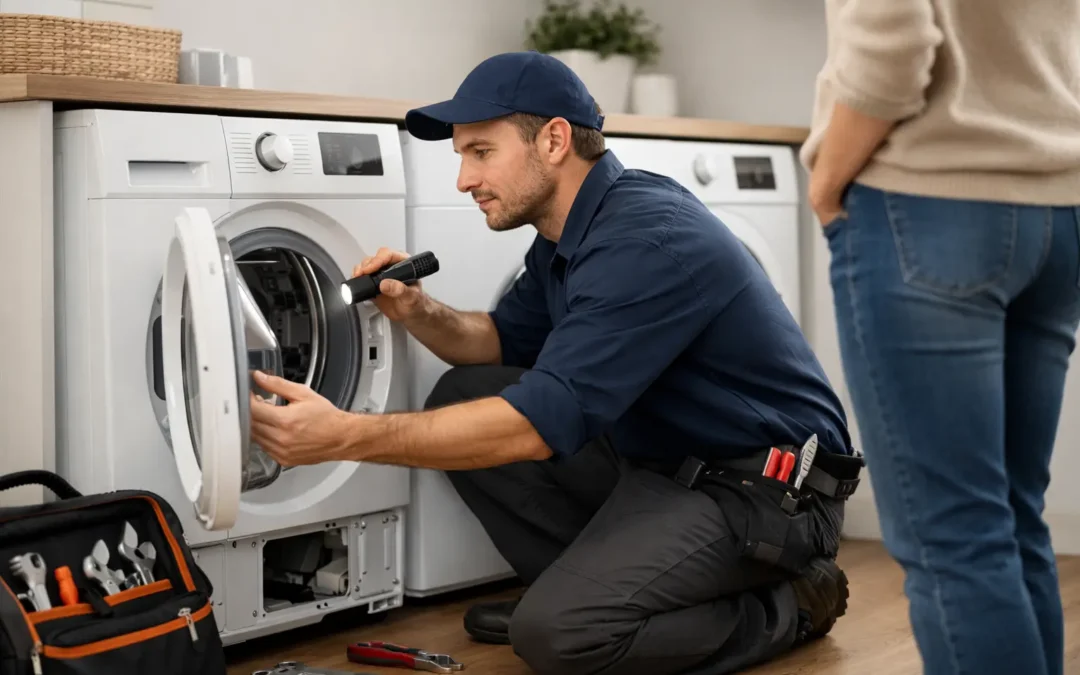
A washer that stops mid-cycle usually does not fail at a convenient time. It happens when laundry is piling up, towels are needed, or a tenant is waiting for an update. That is when a qualified washer repairman matters most – not just someone who can replace a part, but a professional who can diagnose the real problem, explain the next step clearly, and get the machine working again without wasting time.
For homeowners and property managers, washer issues tend to feel simple at first. The unit will not drain, will not spin, leaks onto the floor, or makes a loud banging sound. In reality, those symptoms can point to very different failures. A drain problem might come from a clogged pump, a damaged hose, a faulty lid switch, a control issue, or a worn-out motor component. Replacing the wrong part is where do-it-yourself troubleshooting often gets expensive.
What a washer repairman should actually do
A good service visit is not just about showing up with tools. It starts with diagnosis. The technician should ask the right questions, inspect the machine, test the likely failure points, and narrow the issue down before recommending repair. That matters even more with newer washers, where electronic controls, sensors, locks, and high-efficiency components have added complexity.
A proper diagnosis also helps protect your time. If a washer is worth repairing, you should know why. If it is not, you should know that too. Clear communication is part of the job.
On a typical visit, a washer repairman may check the drain pump, inlet valves, door or lid latch, pressure switch, motor, belt, shock absorbers, suspension system, control board, and water lines. If the washer is leaking, the source has to be identified carefully. Water under the unit does not always mean the tub itself is damaged. It could be a hose connection, a pump seal, a dispenser issue, or an overfill condition.
Common signs you need washer repairman service
Some washer problems are obvious, but others build gradually. The earlier they are diagnosed, the better the chance of avoiding bigger damage.
If the washer will not start at all, the issue may be electrical, mechanical, or control-related. A tripped breaker is one possibility, but beyond that, the cause could involve the door lock assembly, timer, user interface, or internal wiring. Front-load units especially rely on door lock systems that must work correctly before the cycle can begin.
If the washer fills but does not agitate or spin, there may be a motor or drive issue. On some machines, a worn coupling, belt, clutch, or actuator is the real problem. On others, the control is not sending the right signal. Guessing rarely helps here.
If the washer does not drain, avoid running repeated cycles in hopes it will clear itself. Standing water adds stress to the machine and can create a mess quickly. A blocked drain pump, obstruction in the hose, or failed pump motor is common, but the cause still needs to be confirmed.
Leaks deserve fast attention. Even a small leak can damage flooring, baseboards, or walls, especially in laundry rooms on upper levels. If the machine is shaking violently, that is another issue to address early. An unbalanced load can happen once in a while, but repeated banging or walking usually points to worn suspension components, leveling problems, or structural wear inside the machine.
Why washer problems are not always simple
Washers combine water, electricity, moving parts, and electronic controls in one tight system. That makes repair more technical than many people expect. The symptom you notice is not always the part that failed.
For example, a washer that leaves clothes soaking wet may not have a drain issue at all. It may be failing to reach full spin speed because of a motor fault, a balance problem, or a lid switch that interrupts the cycle. A machine that smells bad may need more than cleaning. In some cases, poor draining, trapped debris, or a failing pump is contributing to the odor.
This is one reason professional diagnosis matters so much for both standard and premium appliances. Higher-end laundry units often use advanced controls and brand-specific components. They can be excellent machines, but they require the right service approach. A rushed repair can create a second problem.
Repair or replace? It depends on the machine
Not every washer should be repaired, and a trustworthy technician should be honest about that. Age matters, but it is not the only factor. Brand, condition, parts availability, previous repair history, and the cost of the current issue all affect the decision.
A relatively new washer with a failed pump or latch is often a solid repair candidate. An older machine with multiple worn systems, recurring leaks, or major bearing damage may be harder to justify. If the repair cost starts approaching the value of replacement, many customers prefer to move on.
That said, replacement is not always the cheaper or easier option. Delivery timelines, installation requirements, haul-away, and compatibility with existing laundry spaces can all complicate the process. For built-in or premium laundry setups, repair is often the better path when the issue can be resolved correctly.
What to expect from professional washer repair service
Service quality is not just about technical skill. It is about reducing the disruption that comes with a broken appliance. Customers should expect clear scheduling, straightforward communication, accurate diagnosis, and realistic repair recommendations.
That process should feel organized from the first call. If parts are needed, you should know what is being ordered and what the next step looks like. If the machine can be repaired the same day, even better. If it cannot, there should still be a clear plan.
For busy households, landlords, and property managers, speed matters. Laundry equipment is not a luxury when people depend on it every day. A reliable service company takes ownership of the repair from diagnosis through completion, rather than leaving customers to chase down updates or figure out the next move themselves.
In Washington homes, quick response can be especially important when a washer leak threatens flooring or when a tenant needs a working unit restored fast. That is where working with an established local service provider can make a real difference.
Choosing the right washer repairman
Not every appliance technician has the same experience level. Washer repair may seem straightforward, but the quality of service often depends on how well the technician understands both common machines and more advanced models.
Look for a company that handles diagnosis, parts procurement, repair completion, and customer communication in one process. That saves time and reduces confusion. It also helps to choose a provider that stands behind the work with a repair warranty.
Experience with premium appliances is another sign of strong technical ability. Even if your washer is not a luxury brand, a company that regularly services more complex systems is usually better equipped to diagnose problems accurately. Medvedkov Professional Services works with both standard and high-end appliance brands, which is especially valuable for customers who expect careful, professional service instead of trial-and-error repairs.
When fast service matters most
There are times when waiting a few days is frustrating, and there are times when waiting creates bigger problems. If your washer is actively leaking, tripping breakers, producing a burning smell, or making severe grinding or banging noises, stop using it and schedule service as soon as possible.
The same goes for situations involving rental properties, move-ins, listings, or insurance-related damage concerns. In those cases, delays can affect more than convenience. They can affect occupancy, timelines, and repair costs across the property.
A dependable washer repairman helps restore more than the machine. The real value is getting your routine, your property, or your household back on track with less stress and fewer surprises.
If your washer is not draining, spinning, starting, or staying watertight, the smartest next step is simple – have it diagnosed by a professional who can identify the issue correctly and handle the repair from start to finish. A clear answer is usually the fastest path back to normal.